


The Language of Stress and the Path Back to Safety
- julieannecaterini
- Nov 11, 2025
- 4 min read

Reconnecting with Your Body’s Wisdom
Stress is a universal experience, yet deeply personal in how it moves through each of us.It’s not just the busy schedule, the tight deadline, or the emotional overwhelm.It’s the silent language your body speaks when it’s been carrying too much, for too long.
We often talk about stress as a feeling, but really, it’s a conversation, a full-body dialogue between your nervous system and your environment. Every sigh, every ache, every wave of fatigue is your body’s way of whispering, “I’m trying to keep you safe.”
This blog is an invitation to begin listening.
To move beyond managing stress, and instead, to understand it, to meet your body not with frustration, but with compassion.
Redefining Stress as a Body Language, Not a Character Flaw
Stress isn’t a sign of weakness; it’s a sign of life.It’s your body’s built-in safety system, designed to help you respond, protect, and adapt. When your nervous system perceives a threat (real or imagined), it mobilizes energy to help you survive. Heart rate quickens, muscles tense, and breath becomes shallow, your body prepares to act.
This is the stress response, and it’s beautifully intelligent.The challenge arises when we never get the chance to complete the cycle, to return from activation to calm.
In modern life, we rarely give the body the closure it needs. Deadlines pile up, emotions stay unexpressed, rest feels like a luxury. And so, our systems remain half-activated, ready to run, but never released. We start to live not in rhythm, but in reaction.
The Half-Finished Stress Cycle
You’ve likely felt this before, the constant hum beneath the surface.The sense that even when things are “fine,” your body doesn’t quite believe it.That’s not you being overly sensitive...that’s a half-finished stress cycle.
When energy mobilized for survival isn’t discharged, it lingers.Over time, this can look like anxiety, fatigue, irritability, or burnout.It’s not about mindset, it’s about biology.
Your body doesn’t need to be fixed; it needs to be felt.
Because regulation isn’t about staying calm ... it’s about returning to calm.
About letting the nervous system flow between activation and restoration, without getting stuck on either end.
Completing the Loop
The good news is, your body already knows how to complete the stress cycle.
It’s instinctive. It just needs permission.
Here are a few gentle ways to support your system:
Move: Shake out your hands, stretch, or walk — let energy move through.
Exhale longer: Each slow breath tells your body, “The danger has passed.”
Connect: Safe connection with others or with yourself restores safety faster than logic ever could.
Cry, laugh, sigh, or rest: These are all natural releases — your body’s way of finishing what it started.
As somatic therapist Dr. Peter Levine reminds us,
“The body is designed to return to balance, if we let it.”
Grounding in a Fast World

In a world that rarely pauses, grounding is how we remember safety.
It’s how we remind the body that the moment we’re in now, is not the same as the one that caused the alarm.
Try this:
Take a slow look around the room.
Notice three things that feel neutral or comforting.
Feel the support beneath your body.
Notice your breath meeting that support...the quiet rhythm of life continuing.
This is what regulation feels like, not dramatic, just steady.
The Cost of Staying “On”
When stress becomes a lifestyle, our bodies start carrying a weight they were never built to hold indefinitely.This chronic readiness, what science calls allostatic load is the toll of staying “on.”
You might notice:
A restless mind that can’t slow down.
Tension that never fully releases.
Sleep that doesn’t restore.
Emotions that feel too close or too far away.
None of this means you’re broken.
It means your body has been protecting you without enough time to repair.
Healing begins the moment you stop asking...
What’s wrong with me?”
and start asking,
“What happened to my system, and what does it need now?”
A Gentle Reframe
Stress isn’t your enemy.
It’s your body’s way of saying,“I care about your safety.”
When you meet it with gentleness , through breath, movement, or self-compassion your body begins to trust again.It learns that calm isn’t the absence of challenge, but the presence of safety.
Dr. Kristin Neff reminds us:
“When we give ourselves compassion, we are opening our hearts to ourselves.”
Every exhale, every pause, every small act of awareness...they’re all steps on the path back to safety.
Reflection
Take a breath.
Notice where stress lives in your body today...our shoulders, chest, stomach, jaw.You don’t have to fix it.
Just listen.
Ask gently:“What are you trying to tell me?”
Maybe the message is simple:
I need rest.
Or I need to move.
Or I need to stop holding so much for everyone else.
Whatever it is ...trust that your body knows the way home.
All you have to do is listen.
A Resource for You
If this topic resonates,
I’ve created a free Stress Reset Mini Guide...
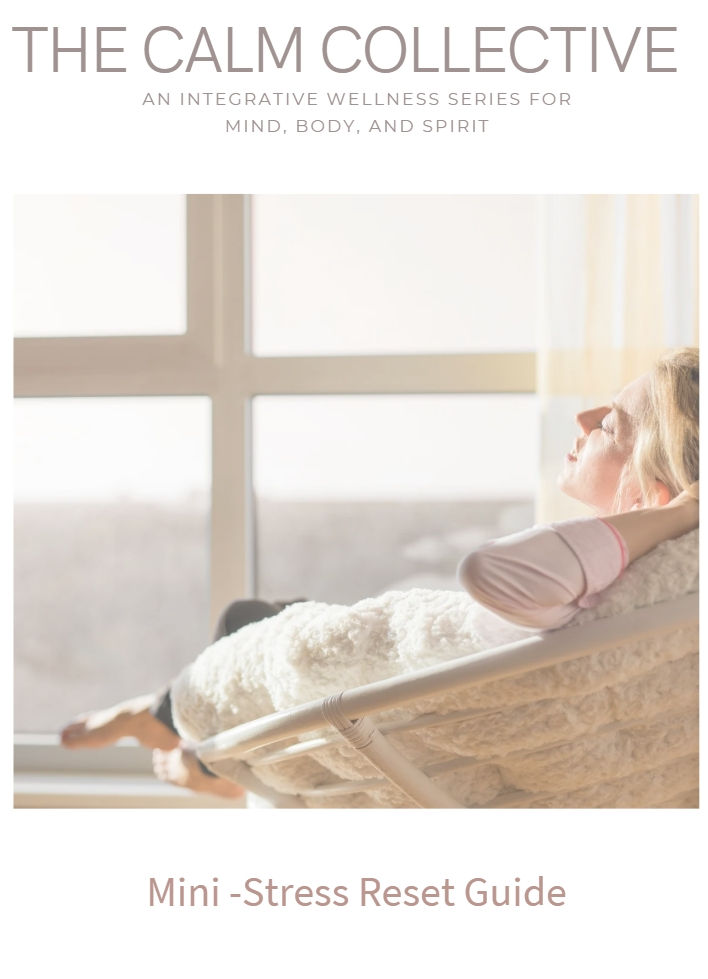
A gentle introduction to understanding your body’s unique stress responses and simple ways to support your nervous system back to balance.
Inside, you’ll find:
→ A quick Stress Cycle Map to help you recognize where stress gets “stuck” in your system.
→ Mini grounding practices to release tension and reestablish calm
→ Reflective journal prompts to help you tune in with compassion instead of criticism.
It’s a small but powerful starting point, a moment of pause in a world that rarely slows down.
Download your free Stress Reset Mini Guide and begin reconnecting with your body’s wisdom, one breath at a time.
✨ Because calm isn’t something you earn... it’s something you remember.



Comments